


Property Transfer Process in Cape Town: A Step-by-Step Guide for Sellers and Buyers
How a property transfer works in Cape Town, step by step, from signed offer to registration at the Deeds Office.
The property transfer process Cape Town sellers and buyers go through is a legal process, also known as conveyancing. Ownership only passes to the buyer when the transfer is registered at the Deeds Registry, not when the offer is signed or the keys change hands. This guide explains each step in plain language, so you know what is happening, what is expected of you and what can slow things down.
What is a property transfer?
A property transfer is the legal process of moving ownership of a property from the seller to the buyer. In South Africa it is handled by a conveyancer, a specialist legal practitioner who prepares the documents, lodges them at the Deeds Office and arranges for the money due to be paid out.
At Roberts Incorporated, our legal team handles your transfer from start to finish, so you have one accountable point of contact. Read more about our conveyancing service.
Property transfer process Cape Town: the steps from signed offer to registration
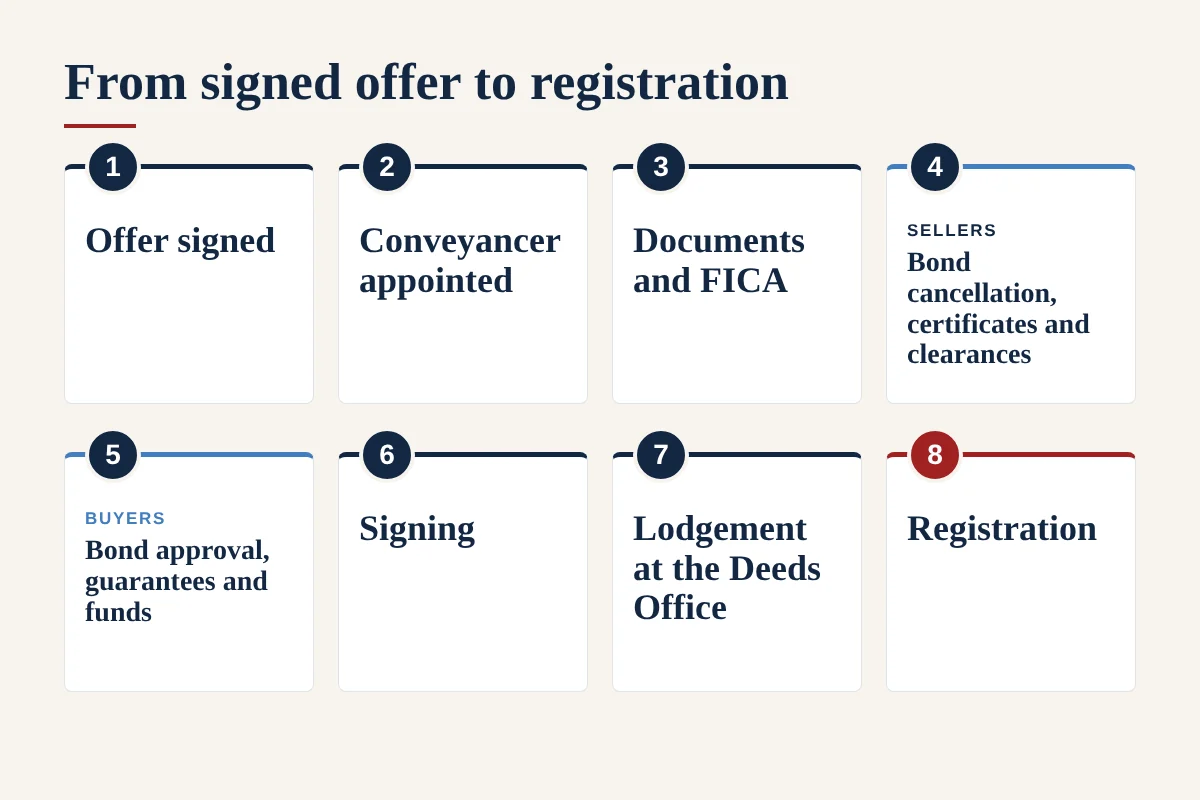
1. The offer to purchase is signed
The offer to purchase must be in writing and signed by both seller and buyer. It records the price, any deposit, the conditions (such as bond approval or compliance certificates) and the occupation date.
- Sellers: check what the offer says about certificates, fixtures and occupation.
- Buyers: make sure you understand every condition, and have your bond pre-approval in place.
Where a property practitioner is involved in the sale, the Property Practitioners Act requires the seller to complete and sign a mandatory disclosure form listing any known defects or deficiencies in the property. The buyer must receive a copy before making an offer, and the signed form is attached to the offer to purchase and forms part of it. If the form is missing, the agreement is read as if no defects were disclosed to the buyer.
2. A conveyancer is appointed
The seller chooses the conveyancer who attends to the transfer. This is long-standing practice and is usually recorded in the offer to purchase. The buyer pays the transfer fees, and if the buyer takes a bond, the bank appoints its own conveyancer to register it. The estate agent sends the signed offer to the conveyancer, who opens the file.
3. Documents and FICA
Both sides provide identity documents, proof of address, tax numbers and marital status details. Companies and trusts need extra documents. These are required by the Financial Intelligence Centre Act (FICA). If the offer requires a deposit, it is normally held in the conveyancer's trust account until transfer.
4. Sellers: bond cancellation, certificates and clearances
If you have a bond, your bank must be given notice to cancel it. Banks generally require 90 days' notice, and if the bank receives shorter notice it may charge penalty interest, so tell your legal team about the bond as early as possible. You also need valid compliance certificates, and the conveyancer obtains a rates clearance certificate from the City of Cape Town. For sectional title and estates, a levy clearance is needed from the body corporate or homeowners' association.
5. Buyers: bond approval, guarantees and funds
Once the buyer's bond is approved, the bank issues guarantees for the loan amount. The buyer pays transfer duty and costs into the conveyancer's trust account before the documents are lodged. See what each side pays.
6. Signing the transfer documents
Seller and buyer sign the transfer documents, which the conveyancer checks carefully. Mistakes at this stage are a common cause of delays later. We can arrange for documents to be signed at your home or office.
7. Lodgement at the Deeds Office
The conveyancer lodges the documents at the Deeds Registry in Cape Town. The transfer, the seller's bond cancellation and the buyer's bond registration are lodged together so that they register on the same day. The Deeds Office examines the documents. If anything is incorrect, they are rejected and must be corrected and lodged again, which adds time.
8. Registration
When the Deeds Office registers the transfer, ownership passes to the buyer. The seller's bond is paid out, the balance is paid to the seller, the estate agent is paid and the buyer receives the keys, subject to the occupation date in the offer.
How long does a property transfer take in Cape Town?
Cash transfers typically register in four to eight weeks and bonded transfers in eight to twelve weeks, subject to the usual variables such as bond approval, the seller's bond cancellation, certificates and the Deeds Office.
What can delay a transfer?
- Slow bond approval or incomplete bond documents
- Missing, expired or failed compliance certificates
- Delays in rates or levy clearance figures
- The seller's bank taking longer to provide cancellation figures
- Incomplete FICA documents from either party
- Documents rejected by the Deeds Office
- Parties who are slow to sign or reply
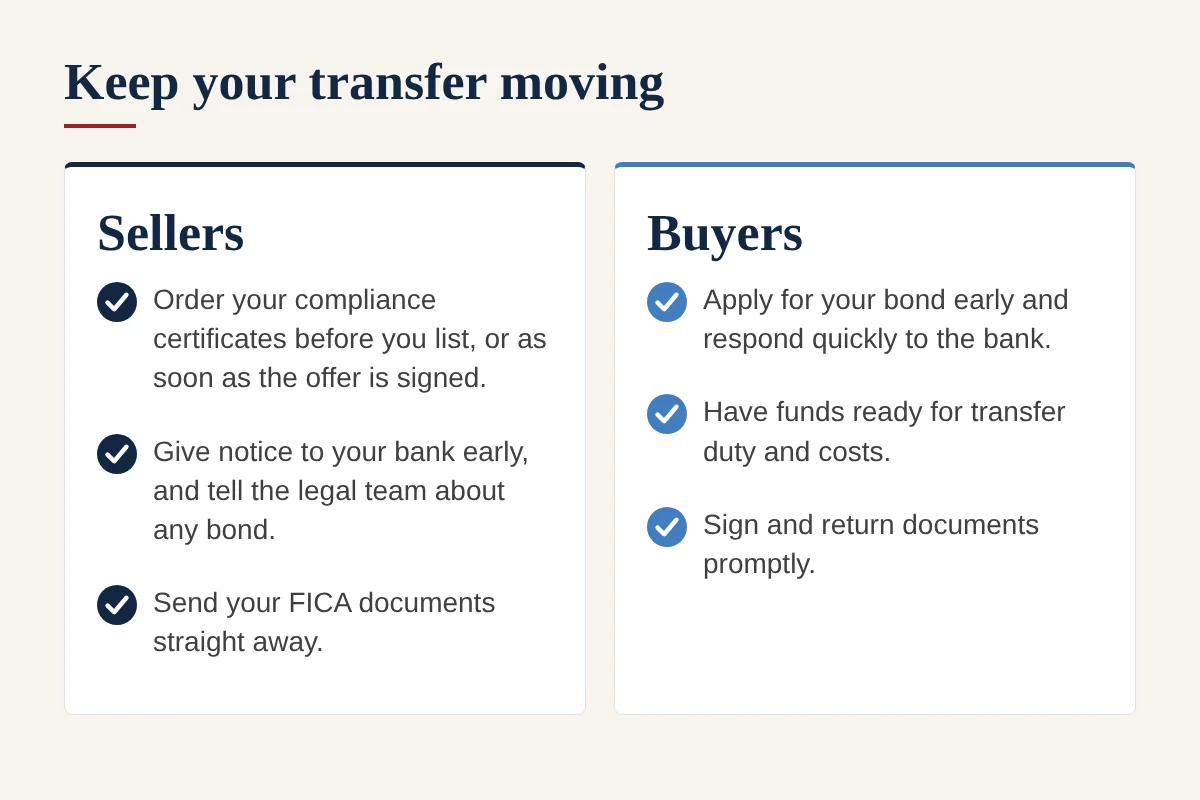
How to keep your transfer moving
Sellers
- Order your compliance certificates before you list, or as soon as the offer is signed.
- Give notice to your bank early, and tell the legal team about any bond.
- Send your FICA documents straight away.
Buyers
- Apply for your bond early and respond quickly to the bank.
- Have funds ready for transfer duty and costs.
- Sign and return documents promptly.
Costs involved
Transfer duty, legal fees, Deeds Office fees and bond costs all form part of a transfer. Our guide to conveyancing costs in Cape Town breaks down who pays what, and you can estimate your own figures with our cost calculators.
How Roberts Incorporated helps
Roberts Incorporated is a boutique Cape Town law firm built on relationships, not transactions. Our legal team is available, accountable and focused on moving your matter forward, so you always know where your transfer stands.
Frequently asked questions
Who appoints the conveyancer in a property transfer?
The seller chooses the conveyancer who attends to the transfer. This is long-standing practice and is usually recorded in the offer to purchase. The buyer pays the transfer fees, and if the buyer takes a bond, the bank appoints its own conveyancer to register it.
How long does a property transfer take in Cape Town?
Cash transfers typically register in four to eight weeks and bonded transfers in eight to twelve weeks, subject to the usual variables such as bond approval, the seller's bond cancellation, certificates and the Deeds Office.
When does ownership pass to the buyer?
Ownership passes when the transfer is registered at the Deeds Registry, not when the offer to purchase is signed or the keys are handed over.
Can a buyer move in before the transfer is registered?
Only if the offer to purchase allows it. Early occupation is usually subject to the buyer paying occupational interest to the seller, so it is important to speak to the legal team before agreeing to it.
Is a deposit always required?
No. Where the offer to purchase requires a deposit, it is normally held in the conveyancer's trust account until the transfer is registered.
Further reading from Cape Conveyancers
Our Cape Conveyancers articles cover related topics in more detail.
- An overview of the transfer journey: a short overview from the sale agreement to registration at the Deeds Office.
- How the 2026 Deeds Office fee changes affect you: the 2026 Deeds Office fee changes and what they mean for your transfer.
Sources
This guide is general information, not legal advice. Every property matter is different, so please speak to our legal team about yours. Information correct at November 2026.
Speak to our legal team
Selling or buying in Cape Town and want clear answers before you sign? Our legal team is available, accountable and focused on moving your matter forward.
Book a consultation