

Contract Law
A poorly drafted contract creates risk before the relationship even begins. Roberts Incorporated assists individuals and businesses in Cape Town with drafting, reviewing, negotiating and enforcing agreements that are clear, enforceable and built to hold.
Contracts underpin almost every significant transaction, property sales, business agreements, service arrangements, employment terms and development structures. When they are drafted carefully, they protect everyone involved. When they are not, they become the source of disputes that are expensive and time-consuming to resolve.
We work with clients at every stage of the contract lifecycle, from drafting a new agreement from scratch, to reviewing terms before signing, to enforcing rights when the other party fails to perform. Our approach is practical: we focus on what the contract needs to do, identify where it falls short and fix it before it becomes a problem.
What we handle
Drafting contracts
New agreements drafted from the ground up - tailored to your specific transaction, with clear terms, enforceable obligations and no ambiguity about what each party has agreed to.
Reviewing & negotiating
Before you sign, we review the agreement line by line - identifying unfair terms, hidden risks and gaps in protection - and negotiate improved terms on your behalf where needed.
Enforcing contracts
When the other party fails to perform, we advise on your options and act - through demand, negotiation, mediation, arbitration, or litigation - depending on what the matter requires.
Resolving contract disputes
Disagreements about interpretation, performance or breach - handled through the most efficient resolution process available, with a clear view of your rights and exposure from the outset.
Types of contracts we work with
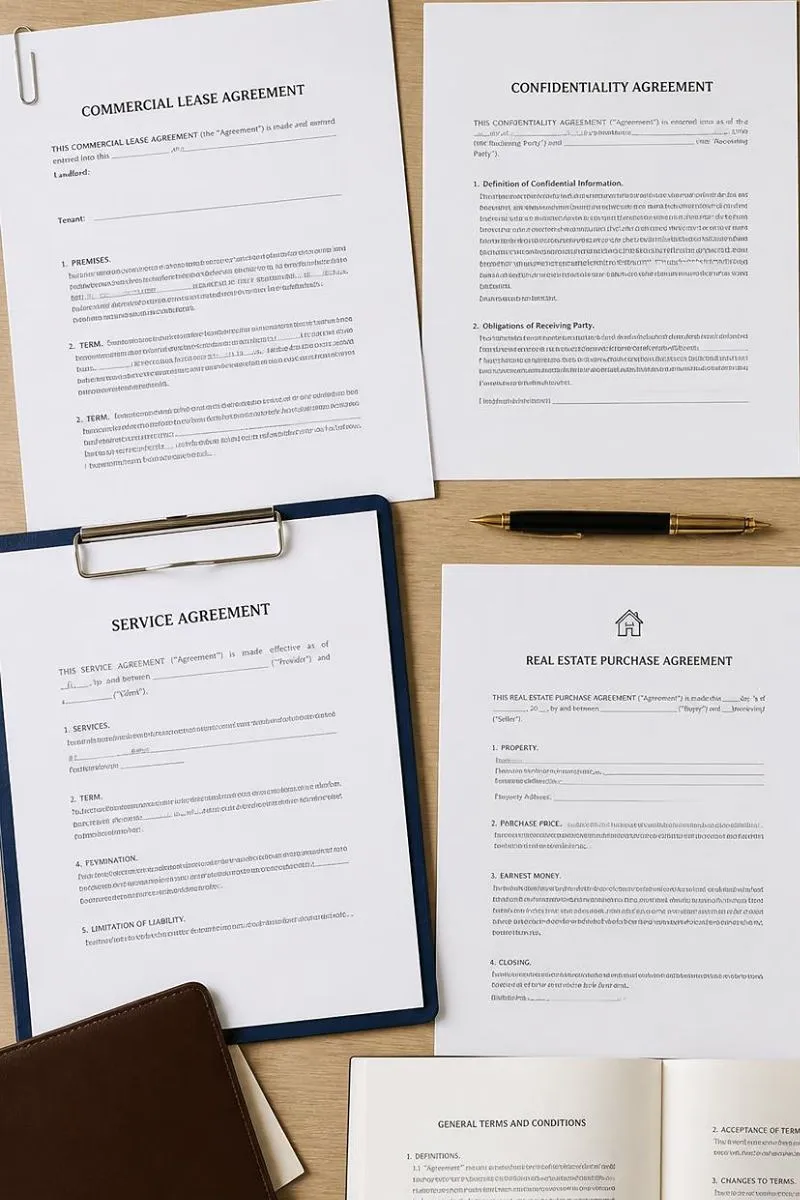
✓ Property sale agreements
✓ Commercial lease agreements
✓ Service and retainer agreements
✓ Construction and building contracts
✓ Shareholder and partnership agreements
✓ Development and joint venture agreements
✓ Settlement agreements
✓ Antenuptial contracts
✓ Non-disclosure agreements
Our Approach
Prevention over litigation
A well-drafted contract is the most cost-effective legal work you will ever do. We invest the time upfront to reduce the risk of disputes later.
Plain language
Contracts should be understood by the people who sign them. We draft clearly and explain the terms in plain language, no unnecessary complexity.
Commercial awareness
We understand that contracts serve a business or personal objective. Our advice is grounded in what you are trying to achieve, not just what the law requires.
Decisive when needed
When a contract is breached, we act promptly. We assess your position, advise on your options, and move, so time and leverage are not lost.
Areas we cover
Our Legal Services


Frequently Asked Questions
For a contract to be legally binding in South Africa, it must meet four basic requirements: there must be an offer and a clear acceptance of that offer; both parties must have the intention to be legally bound; both parties must have the legal capacity to contract; and the agreement must be for a lawful purpose. Certain types of contracts, such as property sale agreements and antenuptial contracts, must also be in writing and signed to be valid. A verbal agreement can be binding, but it is significantly harder to enforce when a dispute arises.
You are not legally required to use an attorney, but the risk of not doing so is real. Template contracts found online are rarely tailored to your specific situation and often contain gaps, ambiguous terms, or clauses that do not hold up under South African law. An attorney-drafted contract identifies the risks specific to your transaction, closes the gaps, and gives you a document that is enforceable if things go wrong. The cost of getting it right upfront is almost always less than the cost of litigating a poorly drafted agreement.
A breach occurs when one party fails to perform their obligations under the agreement. Depending on the nature and severity of the breach, your options may include demanding performance, cancelling the contract and claiming damages, or seeking an interdict to prevent further breach. The right course of action depends on what the contract says, what has actually happened and what outcome you are trying to achieve. We assess your position and advise you on the most effective and cost-efficient route forward.
Yes, but only with the agreement of all parties. A signed contract can be amended through a written addendum or variation agreement, provided both parties consent to the changes. Unilateral changes, where one party simply decides to act differently from what was agreed, are not binding and may themselves constitute a breach. If you need to amend an existing agreement, we can draft a variation that is properly worded and legally effective.
In most cases, the Prescription Act gives you three years from the date you became aware of the breach to bring a claim. After that period, the claim may prescribe, meaning you lose the right to enforce it. There are exceptions depending on the nature of the contract and the parties involved, but the general rule is that waiting is rarely in your interest. The sooner you take advice, the more options you have.