


Compliance Certificates When Selling Property in Cape Town
Which compliance certificates you need to sell a home in Cape Town, and when to order them.
Compliance certificates Cape Town sellers must provide before a transfer can go ahead include some that are required by law and others that are customary. Missing or expired certificates are one of the most common reasons a transfer is delayed, so it pays to know what you need and to order early.
Why compliance certificates matter
Each certificate confirms that a specific part of the property meets safety or legal standards at the time it was inspected. They protect the buyer, and without them the transfer cannot proceed. They form an important part of the property transfer process.
Compliance certificates Cape Town: at a glance
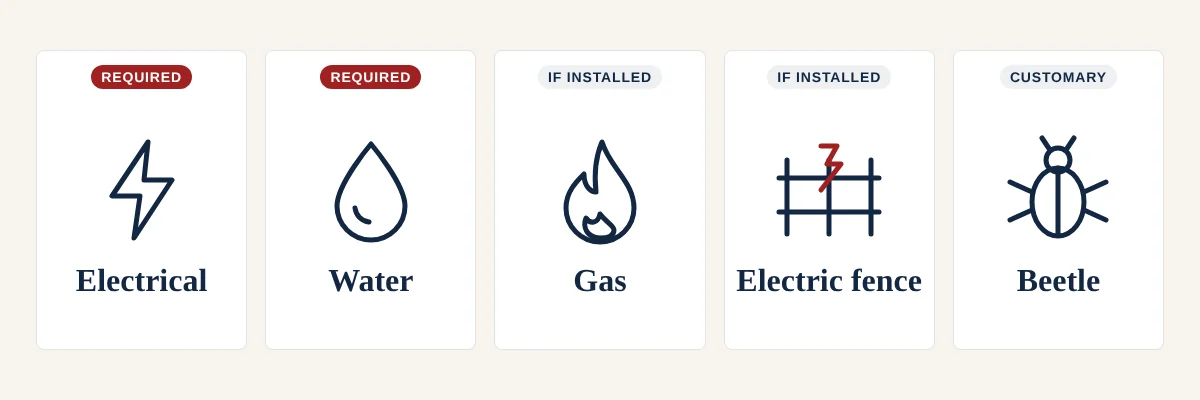
| Certificate | Required? | Issued by |
|---|---|---|
| Electrical | Yes, required by law on transfer | Registered electrical contractor |
| Water installation (plumbing) | Yes, in the City of Cape Town | City-registered plumber |
| Gas | Yes, if there is a gas installation | Registered gas installer |
| Electric fence | Yes, if there is an electric fence | Registered electric fence system installer |
| Beetle | Not by law, but customary in the Western Cape | Accredited beetle inspector |
Electrical certificate of compliance
Every property being transferred needs a valid electrical certificate of compliance, issued by a registered electrical contractor. It is generally accepted if it is not older than two years and no alterations have been made to the electrical installation since it was issued. If there have been alterations, or the parties agree, a new certificate is needed.
Water installation (plumbing) certificate
In the City of Cape Town, a certificate of compliance for the water installation must be submitted before any property is transferred. A City-registered plumber inspects the property, carries out any remedial work and signs the certificate. The conveyancer then submits it to the City. It is a limited check of the water installation, such as leaks, the meter and drainage, and not a full plumbing inspection.
Gas certificate
If the property has a gas installation, a certificate of conformity from a registered gas installer is needed. The offer to purchase normally requires the seller to provide it before transfer.
Electric fence certificate
If the property has an electric fence, an electric fence system certificate of compliance is required on transfer. It is issued by a registered electric fence system installer, not by an electrical contractor. The certificate can be transferred to the buyer if the fence has not been altered since it was issued. In sectional title schemes and estates, the body corporate or homeowners' association often holds one certificate for the whole fence, so check with them first.
Beetle certificate
A beetle certificate is not required by law, but it is customary in the Western Cape and many offers to purchase and banks ask for it. It confirms whether there is wood-boring beetle infestation in the timber of the property. It is often dispensed with where the property has little or no timber, or where the building is new. Ask your legal team whether it applies to your property.
Solar PV and registration with the City of Cape Town
If the property has a solar PV system, the City of Cape Town requires it to be registered as a small-scale embedded generation system. After the application is submitted, the City issues a permission to install letter. Once the system is installed, its certificate of compliance is uploaded to the City, and the system may only be switched on after the City issues its commissioning approval letter.
Registration is free, but a fee applies if you fail to register. A property with an unregistered system can receive a contravention notice and, in the end, have its electricity supply disconnected. If your property is in Eskom's area of supply, Eskom's consent applies as well.
Sellers should keep the City's approval documents and the system's certificate of compliance together, and tell their electrician about the solar installation when ordering the electrical certificate.
Other documents the seller needs
- Rates clearance certificate from the City of Cape Town, obtained by the conveyancer once all rates are paid.
- Levy clearance from the body corporate or homeowners' association, for sectional title and estates.
- Approved building plans. If you have built or altered the property, buyers and banks may ask for approved plans, so check that all work was approved before you list.
The mandatory disclosure form
Where a property practitioner is involved in the sale, the Property Practitioners Act requires the seller to complete and sign a mandatory disclosure form listing any known defects or deficiencies in the property. The buyer must receive a copy before making an offer, and the signed form is attached to the offer to purchase and forms part of it. If the form is missing, the agreement is read as if no defects were disclosed to the buyer.
The form is separate from your compliance certificates. A certificate confirms a specific installation at the time it was inspected, while the form is your own disclosure of the defects you know about, so both matter.
Who pays for compliance certificates?
By default, the seller arranges and pays for the certificates and any repairs needed to pass the inspection. The offer to purchase can agree otherwise, so read it carefully. See what each side pays for the full picture.
When should you order them?
Order your certificates before you list, or as soon as the offer is signed. Contractors can be fully booked, failed inspections need repairs and re-inspection, and every week of delay pushes back registration. Keep in mind that some certificates expire, so do not order too far ahead of a sale.
What if a property fails the inspection?
The contractor will list what needs to be fixed. Once the repairs are done and the property is re-inspected, the certificate is issued. Tell your legal team early if repairs are likely to take time, so the timeline in the offer can be managed.
Frequently asked questions
Which compliance certificates do I need to sell my house in Cape Town?
Sellers need an electrical certificate of compliance and a water installation (plumbing) certificate for the City of Cape Town. A gas certificate and an electric fence certificate are needed if the property has those installations. A beetle certificate is not required by law but is customary in the Western Cape.
Who pays for compliance certificates?
The seller usually arranges and pays for the certificates and any repairs needed to pass. The offer to purchase can agree that the buyer pays instead.
How long is an electrical certificate of compliance valid?
It is generally accepted if it is not older than two years and no alterations have been made to the electrical installation since it was issued.
Is a beetle certificate compulsory in Cape Town?
No, it is not required by law. It is customary in the Western Cape, so many offers to purchase and banks ask for it.
Do I need a plumbing certificate for a sectional title unit?
In the City of Cape Town, a certificate of compliance for the water installation applies to freehold and sectional title properties. Ask your legal team to confirm what applies to your unit.
Further reading from Cape Conveyancers
Our Cape Conveyancers articles cover related topics in more detail.
- Certificate requirements across South Africa: what each certificate checks and how long each one stays valid.
Sources
- City of Cape Town: Submit a certificate of compliance of water installation
- City of Cape Town: Water By-law (consolidated)
- Electrical Installation Regulations, 2009: regulation 7, certificate of compliance
- Electrical Machinery Regulations, 2011: regulation 13, electric fence system certificate
- City of Cape Town: Apply for authorisation to install a small-scale embedded generation system
- Property Practitioners Act, 2019: section 67, mandatory disclosure form
This guide is general information, not legal advice. Every property matter is different, so please speak to our legal team about yours. Information correct at November 2026.
Speak to our legal team
Selling or buying in Cape Town and want clear answers before you sign? Our legal team is available, accountable and focused on moving your matter forward.
Book a consultation